Month: A Warm, Clear Display Font for Everyday Design
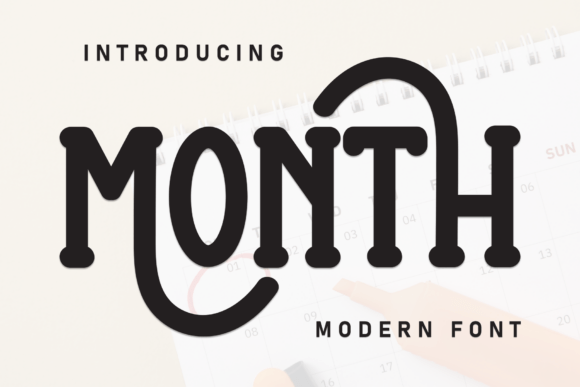
Month is a casual yet refined display font that brings a sense of warmth and clarity to a wide range of design projects. Its clean structure and approachable style make it ideal for headlines, branding, and everyday visual communication. Whether you're crafting a logo, designing a website, or putting together packaging, Month adds a touch of personality without sacrificing readability.
At a glance, Month stands out for its balanced letterforms and open spacing. The typeface avoids overly stylized details, instead opting for a modern, minimal aesthetic that still feels human and inviting. It’s a display font designed to be seen at a glance, yet it maintains enough subtlety to work well in longer headlines or short bursts of text. This makes it a versatile choice across both digital and print environments.
Where Month Fits Naturally
Because of its clean and friendly tone, Month works especially well in branding and identity systems. It pairs naturally with modern typography trends, especially when used alongside simpler sans serif fonts for body text. It’s a strong option for logo design, product packaging, and editorial layouts where a clear visual hierarchy is important.
Designers and content creators can use Month to add a sense of approachability to social media graphics, blog headers, and promotional materials. It also works well in packaging design where clarity and warmth are key—think artisanal products, wellness brands, and lifestyle labels. Its structure allows it to stand out without overwhelming the message, making it a good fit for brand identity systems that need a touch of personality.
How Font Choice Shapes Perception
Fonts do more than just deliver text—they shape how people feel about a message. Month’s open forms and even spacing contribute to a sense of readability and trust. This is especially important in marketing materials, brand communications, and user interfaces where clarity and approachability matter.
When used consistently, Month can help reinforce brand recognition. It brings a sense of professionalism without feeling stiff, and its casual tone helps messages feel more personable. In editorial and publishing contexts, it can serve as a clear, expressive headline font that draws the reader in while maintaining a clean, modern look.
For web design and digital assets, Month performs well in hero headers, call-to-action buttons, and featured content blocks. Its design allows it to scale well across screen sizes, and when paired with the right font weights and spacing, it contributes to a strong visual hierarchy.
Choosing Month for Your Project
Before committing to Month, it’s important to evaluate how well it fits your specific design needs. Consider the tone of your brand or message—is it casual, modern, and approachable? If so, Month is likely a good match. But if your project leans more formal or traditional, you might want to explore other premium font options with more classical structure.
Take time to test Month in different settings. Try it in both uppercase and title case to see how it performs at various sizes. Since it’s a display font, it’s best used for headlines, titles, and short bursts of text rather than long paragraphs. If your project requires a handwritten font or something more decorative, you may want to look into script fonts or serif fonts instead.
Pairing Month with Other Fonts
Font pairing is key to creating a cohesive visual language. Because Month is clean and open, it pairs well with a variety of supporting typefaces. For a modern, minimalist look, pair it with a simple sans serif like Helvetica or Avenir. For a more organic or editorial feel, try a light serif like Merriweather or Lora.
If you're working on a brand identity or marketing campaign, consider using Month for headlines and a more neutral font for body copy. This creates a clear visual hierarchy and ensures readability across different formats. When pairing, always test the combination in context—on a website, in print, or as part of a digital graphic—to make sure the contrast and balance feel right.
Things to Keep in Mind
While Month is a versatile and readable font, it’s important to consider practical factors like commercial licensing and technical support. If you're using it for a client project or a product with wide distribution, make sure the license allows for commercial use and web embedding if needed.
Also, review the full character set and available styles. Some display fonts have limited support for special characters or non-Latin alphabets. If your project requires multilingual support, test the font with sample text to ensure it meets your needs.
Finally, always check for readability at different sizes. Even the best design assets can fall short if they’re hard to read on a phone screen or from a distance. Use Month where it shines—headline text, branding elements, and short-form visual content—and you’ll get the most out of its clean, approachable style.