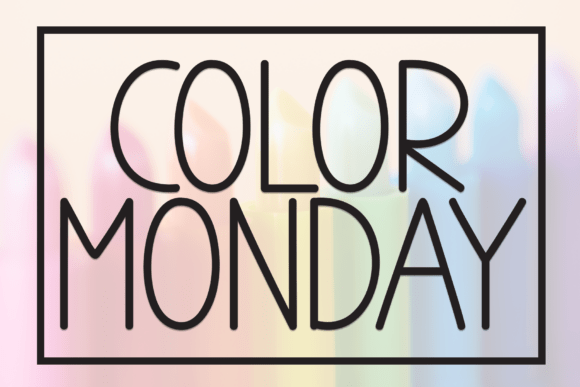
Color Monday: A Handwritten Font That Balances Playfulness and Elegance
When it comes to choosing a font for creative projects, the right typeface can make a significant difference in tone and impact. Color Monday stands out as a distinctive handwritten display font that blends sophistication with a touch of whimsy. Unlike many stylized fonts that lean heavily into one aesthetic, Color Monday strikes a unique balance—offering both character and refinement in a way that appeals to a wide range of design needs.
What Sets Color Monday Apart
At first glance, Color Monday captures attention with its fluid, organic strokes and subtle variations in weight. It’s designed to feel personal, as if written by hand, yet maintains a level of polish that keeps it suitable for more formal applications. This duality makes it versatile for different use cases, from wedding stationery to branding materials.
Unlike rigid script fonts that can feel overly formal or cartoonish styles that border on juvenile, Color Monday finds a middle ground. Its letterforms are expressive without being exaggerated, and its baseline consistency ensures readability even at smaller sizes. The font includes a range of ligatures and alternate characters, allowing for customization and a more natural, handwritten appearance.
How Color Monday Compares to Similar Fonts
In the crowded landscape of handwritten display fonts, many options fall into two categories: overly ornate or intentionally casual. Some fonts lean into dramatic flourishes, which can be beautiful but may overwhelm minimalist designs. Others adopt a loose, sketch-like quality that works well for children’s books or informal branding but lacks the polish needed for more refined applications.
Color Monday avoids these extremes. Compared to fonts with exaggerated swashes or tight calligraphic forms, it offers a more approachable structure. It shares some characteristics with brush scripts and casual scripts but avoids the visual fatigue that can come from overly stylized strokes. In contrast to more rigid sans-serif or serif fonts, it introduces warmth and personality without sacrificing clarity.
Strengths and Best-Use Scenarios
Color Monday shines in projects where a human touch is desired but professionalism still matters. It’s particularly well-suited for:
- Wedding invitations that feel elegant yet personal
- Greeting cards with a heartfelt tone
- Brand logos that aim to feel friendly and refined
- Social media graphics needing a touch of warmth
Designers appreciate its versatility in color applications as well—its open spacing and clean lines allow for vibrant fills or layered textures without becoming visually cluttered. Whether used in print or digital formats, Color Monday maintains its integrity across different mediums.
Tradeoffs and Limitations
While Color Monday offers many benefits, it’s not a one-size-fits-all solution. Due to its decorative nature, it may not be ideal for long-form body text or technical documents where clarity and neutrality are paramount. Additionally, its stylistic flourishes, while charming, can sometimes limit its adaptability in highly minimalist or ultra-modern design contexts.
Designers should also consider pairing it with more neutral fonts to maintain visual hierarchy. Using it exclusively for all text elements can lead to visual fatigue. It’s best reserved for headlines, titles, and short bursts of text where it can truly stand out.
When to Choose Color Monday—and When to Consider Alternatives
If your goal is to convey warmth, personality, and a sense of authenticity without veering into informality, Color Monday is an excellent choice. It works particularly well for creative professionals, small business owners, and event planners who want to add a personal touch to their materials.
However, if your project requires a more structured or traditional appearance—such as corporate branding, academic publishing, or formal correspondence—you may want to explore alternatives like classic serif fonts or more restrained script styles. Similarly, for projects targeting younger audiences or requiring a more cartoonish tone, a looser, more playful font might be more appropriate.
Practical Examples and Real-World Use Cases
Consider a boutique wedding planner who wants to create custom invitation suites. Color Monday allows for a luxurious yet approachable aesthetic, giving each invitation a handcrafted feel that resonates with couples looking for something unique. Pairing it with a clean sans-serif for secondary text ensures readability while maintaining elegance.
In another scenario, a greeting card designer might use Color Monday to craft heartfelt messages that feel personal and genuine. The font’s expressive nature enhances the emotional tone of the message without appearing overly dramatic or difficult to read.
For digital use, a lifestyle blogger might incorporate Color Monday into social media quotes or website headers to inject warmth and personality into their brand identity. Its adaptability across formats makes it a reliable choice for both static and animated content.
Making an Informed Choice
Selecting the right font involves more than just aesthetics—it’s about matching tone, purpose, and audience expectations. Color Monday offers a compelling middle ground between elegance and playfulness, making it a strong contender for designers who want to convey warmth without sacrificing professionalism.
Before finalizing your choice, consider testing Color Monday in various contexts—print, digital, color, and black-and-white—to ensure it aligns with your overall design vision. Experiment with pairings, spacing, and weights to see how it integrates with the rest of your layout. If it supports your message and enhances your design without overwhelming it, you’ve likely found a font that not only looks good but also works well.